The Journal · 3 min read
How to measure yourself for a custom-stitched outfit
A step-by-step guide to measuring your bust, waist, hip, shoulder, sleeves and lengths for a custom-stitched lehenga, choli, kurta or suit — and the mistakes to avoid.
By the Suvastram Label studio, Surat ·
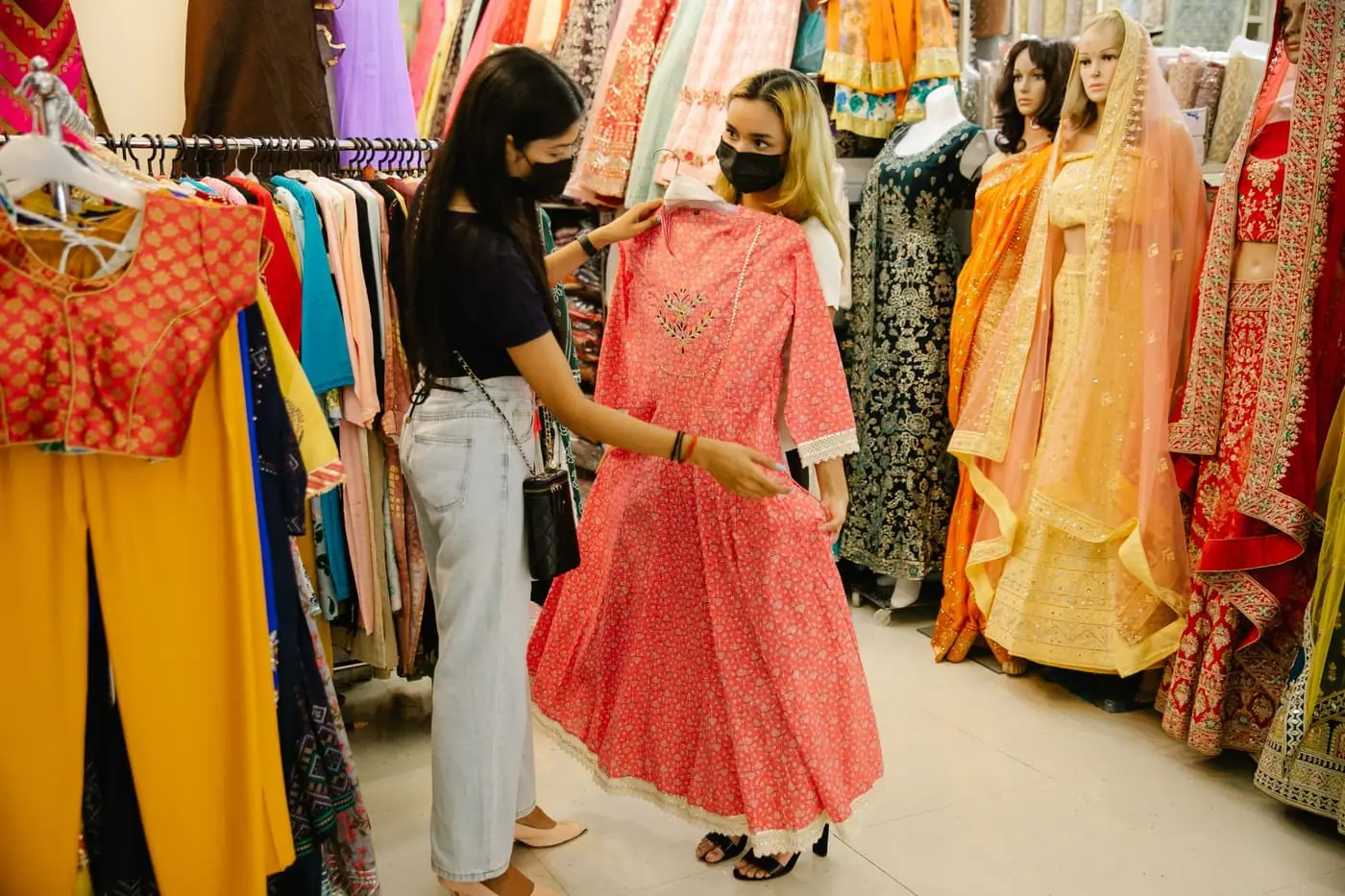
A made-to-measure outfit is only as good as the measurements behind it. The good news is that taking them takes about ten minutes. You'll need a soft measuring tape, a mirror and, ideally, a friend — some measurements are much easier with help.
Before you start
- Wear the undergarments you'll wear with the outfit, and nothing bulky over them.
- Stand straight and relaxed, feet together, breathing normally — don't hold your breath or pull your stomach in.
- Keep the tape snug but not tight: you should be able to slip one finger under it.
- Measure in inches, and take each measurement twice.
The measurements
- Bust: around the fullest part of your bust, keeping the tape parallel to the floor across your back.
- Under-bust: around your ribcage, just below the bust — essential for cholis and blouses.
- Waist: around your natural waist, the narrowest part of your torso. For a lehenga, also measure where you'll actually wear the skirt — many people wear it at or just below the navel.
- Hip: around the fullest part of your hips and seat, usually 7–9 inches below the waist.
- Shoulder: across your back from one shoulder bone to the other — ask your helper for this one.
- Armhole: around your arm where it meets the shoulder.
- Upper arm: around the fullest part of your upper arm, for fitted sleeves.
- Sleeve length: from the edge of your shoulder to where you'd like the sleeve to end.
- Kurta or anarkali length: from the highest point of your shoulder, beside the neck, down to where you'd like the hem.
- Lehenga or sharara length: from where you'll wear the waistband down to the floor — wearing the shoes you'll wear with the outfit.
- Pant length: from your waist to your ankle.
Body measurements, not garment measurements
Always send your body measurements; we add the ease. Our garments include about 2 inches of ease so they sit comfortably, so measuring an old outfit that fits you well can mislead. If you like a snug or a relaxed fit, simply tell us.
Compare your numbers with our size guide: our standard sizes run from XS to 3XL. If you're between two sizes in a standard size, go one size up.
Common mistakes
- Measuring over jeans, a jacket or a thick top.
- Pulling the tape tight “to be safe” — the outfit will come out too small.
- Forgetting your heels when measuring the length of a lehenga or anarkali.
- Measuring your own shoulders and back alone — ask for help.
- Rounding down. If a measurement falls between two numbers, note the larger one.
Sending us your measurements
On most of our styles, choose “Custom size” when you add the outfit to your bag. Our team will contact you on WhatsApp for your measurements before we stitch — or measure with you on a video call. Custom sizing is free on most styles; design changes such as a different neckline may carry a small charge, which we always confirm first.
Made-to-measure outfits dispatch in 7–12 working days. Because they're stitched for you, custom-sized pieces can't be exchanged unless they arrive faulty — so we double-check your measurements with you before we start. Read more about custom stitching.